BUILD TO SCALE SERIES
Helping NZ founders build the capabilities that drive successful global healthtech products.
Expert insights • founder stories • practical capability guidance
%20(1).avif)
%20(1).avif)
.avif)
Build to Scale Series
Practical guidance to help healthtech companies move from early traction to scalable growth. Build to Scale is the HealthTech Activator’s capability-building series for founders and teams preparing for their next stage of growth.
The series brings together expert insights, founder experiences, and practical tools to help healthtech companies navigate the real-world challenges of scaling. Explore resources across market validation, clinical validation, regulatory, and reimbursement, and apply what you learn immediately.
All content is tailored to the New Zealand healthtech context, with relevance across global markets. If you would like to talk through how this applies to your company, get in touch with HTA.
Expert Insights
Expert-led insights focused on developing the capabilities healthtech companies need to scale.

Clinical Validation
Clinical validation builds the evidence needed to show a healthtech solution is safe, effective, and fit for use. This pillar focuses on preparing for clinical studies, designing robust evidence, and balancing scientific rigour with commercial timelines.
- Why are clinical trials important for healthtech companies?
- When should companies start thinking about clinical trials?
- When is a company ready to enter the clinical trial stage?
- What should companies be thinking about when considering a clinical trial?
- How can healthtech companies balance scientific robustness with commercial timelines and budgets?
- What's one piece of advice you would give a company designing its first clinical trial?
- What are the benefits of running clinical trials in New Zealand?
Why do clinical trials matter, and when should healthtech teams start planning for them?
Julie Jones explains why early thinking about clinical validation, trial design, and patient safety is critical to getting products approved and into real-world care.
|“At the end of the day, there is a patient at the centre of your trial.”
Why do so many good ideas stall in healthtech?
Dan Hansen explains why early market validation is critical to building scalable solutions, and how clearly defining the problem and customer can make or break your strategy.
| “Without understanding your market, the strategy is just hopes and dreams.”

Market Validation
Market validation helps founders test assumptions and confirm real customer demand. This pillar covers understanding customers, validating unmet needs, and reducing risk before scaling or entering new markets.
- At what stage in the company journey does market validation become most critical?
- What is the most overlooked step in the market validation process?
- What is the key consideration for companies undertaking market validation?
- Why is market validation important for healthtech companies?
- Can you share an example of where early market validation saved time or money for a startup?

Regulatory
Regulatory strategy guides how products are developed and brought to market. This pillar explores regulatory pathways, common pitfalls, and how early planning can support growth rather than slow it down.
- Why is regulatory strategy important for medical device companies?
- When in the company life cycle is regulatory strategy most important?
- What are the most common regulatory misunderstandings among New Zealand companies?
- How should companies prioritise between different regulatory markets?
- What practical tips would you give to a company setting up QMS early in their journey?
- How can regulatory planning support company growth?
- What are the top three mistakes companies should avoid when setting up a QMS?
- What positives have you seen in New Zealand companies?
- What is the one key takeaway companies should learn about regulation?
- HTA Regulatory Page
- Driving Quality Forward – Risk & Efficiency Strategies for ISO 13485 Success (QMS)
- Quality Management Systems (QMS) Series
- Nutraceuticals, dietary supplements & functional foods: FDA considerations
- Medical devices & in vitro diagnostics: FDA considerations
- Drug products: FDA considerations
Why should regulatory strategy be one of the first decisions a healthtech company makes?
Anne Arndt explains why regulation is not a final hurdle, but a foundational input that shapes product development, market entry, and long-term success.
|“Regulatory strategy is your recipe.”
What is reimbursement, and when should healthtech companies start planning for it?
Abbas Al-Murrani explains how reimbursement strategy fits into the commercialisation journey, why expectations differ across markets, and what evidence payers need to see to support funding decisions.
| “Ultimately, where systems differ is what they are willing to pay for health technology.”

Reimbursement
Reimbursement determines whether a product can be funded and adopted at scale. This pillar focuses on payer expectations, evidence requirements, and planning for reimbursement early across key markets.
- What is reimbursement?
- At what stage is reimbursement strategy most critical?
- In what ways do reimbursement expectations differ across markets?
- How should companies align their clinical trial design with the evidence payers actually need?
- What are the biggest mistakes you see companies make when planning for reimbursement?
- What advice would you give companies on their reimbursement journey?
Case Studies & Capability in practice
Expert-led insights focused on developing the capabilities healthtech companies need to scale.
Cannulight
“HealthTech Activator gave our Founder and COO a lot of confidence that Cannulight’s product will work globally.”
Wendy Kerr, CCO
As a dentist, Dr James Stone often found the hardest part of removing wisdom teeth was administering the IV line to sedate patients.
Sedation can be a daunting concept for some patients, and failed IVs can exacerbate patient stress, as they cause delays and excess pain. This sparked an idea.
What if there was a device that made the IV process easier, resulting in fewer failed procedures?
Cannulight revolutionises the most performed medical procedure globally – with 1.4 billion IVs placed every year, this is a significant addressable market. The medical device company is currently at the manufacturing verification stage, ensuring all Cannulight sensors produced consistently meet industry-standard design specifications, and is developing their product for infrared and arterial applications.
Cannulight allows clinicians to know whether they have successfully entered the patient’s vein when the pressure sensor, which fits on the back of an IV needle, lights up green. Clinicians can instantly confirm IV placement, which is critical for treating patients with hard-to-find veins or in unsteady situations, such as a moving ambulance. When asked what medtech companies need to be successful, Mike Munley, Cannulight’s Chief Operating Officer (COO), identified three Rs that must be managed: research, regulation, and reimbursement.
Munley says for any medtech invention to be commercially viable, the three Rs must work together, and working with HealthTech Activator helped them build capabilities across all three areas and determine which area to focus on and when through their innovation journey.
HealthTech Activator supports medtech companies with market validation, business and strategy advice, and guidance on reimbursement, health economics, and quality management through workshops and expert resources to reduce potential risks.
“What the HealthTech Activator has done is really give our Founder and COO a lot of confidence that Cannulight’s product will work globally,” says Wendy Kerr, Cannulight’s Chief Customer Officer.
Dr Stone encourages other founders to work with HealthTech Activator as soon as possible to build a corporate strategy and embed health economics early. Establishing these foundations is essential to address investor questions with confidence and prove how the product could scale globally. With support from HealthTech Activator, Cannulight is now in a strong position to drive international adoption of its devices in hospitals.
Read more about Cannulight at www.cannulight.com
SWALTECH
The company transforming rehabilitation for people with swallowing disorders
Most people don’t think about swallowing until they lose the ability to do it.New Zealand medtech company, Swallowing Technologies (SwalTech), is supporting people recovering from swallowing disorders or dysphagia by creating innovative technologies that help patients’ recovery.
Currently, there is limited support available for people recovering from medical conditions such as strokes, Parkinson’s disease, and head and neck cancer.From the time of a dysphagia diagnosis, 25 percent of people will die within one month, and 50 percent within a year without effective rehabilitation. Dysphagia resulting from stroke alone costs the New Zealand economy an estimated $101 million each year.Despite the serious risks associated with dysphagia, rehabilitation within speech and language therapy receives little funding or technological investment in New Zealand.
“Giving tools that can actually have such a demonstrable impact, not just financially, but for quality of life – why wouldn’t you do it?” says Emma Hayes, CEO of SwalTech.
SwalTech’s BiSSkApp delivers clinical-grade rehabilitation in patients’ homes, allowing them to visualise what happens when they swallow. The app transmits muscle activity during the swallowing process and displays it as a waveform on screen. This visual feedback, used alongside clinician guidance, helps patients adjust and improve their swallowing technique.
By enabling patients to complete their rehabilitation remotely, BiSSkApp reduces clinician workload, allows clinicians to oversee more patients, and lowers overall costs to the health system.
Hayes says HealthTech Activator supported SwalTech’s development across the following areas: market validation, regulatory and quality management systems, and health economics.
“We got the opportunity to interview different specialists within different markets. That was valuable in terms of understanding what the market looks like and validating or invalidating some of our assumptions,” says Hayes.Through HealthTech Activator’s workshops on quality management systems and health economics, SwalTech gained the knowledge required to standardise production processes and demonstrate BiSSkApp’s value for patients and the healthcare system.
“It’s changing the way rehabilitation is done, you know, you can do it at home. Something like this is empowering patients to take back their life,” says Eric UfiPoa Taule'ale'ausumai, Patient Engagement Specialist at SwalTech and Stroke Survivor.
Read more about SwalTech at https://swaltech.com/
ClinList
“ClinList is an early-stage workflow platform helping doctors move away from outdated systems and fragmented communication.”
Harrison Bolt, Co-Founder & Junior Doctor
For junior doctor Harrison, the problem was impossible to ignore.During a particularly overwhelming shift covering 50 to 60 patients across multiple wards, clinicians were relying on scattered notes, outdated systems, and fragmented communication just to keep up.
“It was a complete shambles,” he recalls. “We all had our own pieces of paper. We were patching together all these different tools just to get by.”
That experience became the catalyst for ClinList, a workflow platform designed specifically for clinicians.Built to integrate existing medical records into a mobile-first interface, ClinList brings critical patient information directly to doctors at the point of care, helping reduce administrative burden, improve team coordination, and create safer workflows for patients.Harrison recognised the challenge extended far beyond a single hospital.
“The problem scales far beyond one hospital. It’s an international problem,” he says.
Rather than creating another disconnected healthcare tool, ClinList was built around the realities of how clinicians actually work day-to-day.
Harrison partnered with co-founder Eddie, combining clinical insight with technical expertise to develop a solution capable of integrating fragmented systems into a streamlined workflow platform.“What really stood out to me was that this was a real problem that Harrison had encountered himself,” Eddie explains.
“There’s so many things that I don’t have knowledge about or even an intuition for in terms of what would be important for a doctor at that point of care.”The result is a platform designed to replace outdated, paper-based processes with a dynamic mobile solution that allows doctors to access the information they need quickly and efficiently throughout the day.
ClinList aims to give clinicians more time with patients, while improving communication and alignment across care teams.
Early engagement with the HealthTech Activator helped shape ClinList’s commercialisation journey. Harrison says the workshops challenged him to think beyond the solution itself and focus more deeply on validating assumptions and understanding what hospitals actually value.
“The workshops were incredibly valuable,” he says. “Just from that one workshop, I’ve met mentors that I keep in contact with, other founders I keep in contact with. I really value their insight and experience to help me push my thing forward.
”The experience also reinforced the importance of customer discovery and multidisciplinary collaboration in healthcare innovation.Harrison’s advice to other clinicians entering the innovation space is simple: talk to your customers, stress test your assumptions, and build the right team around you.
For ClinList, the mission remains clear: build technology that genuinely works for clinicians, because when systems work better for healthcare teams, they work better for patients too.
Experts and founders
Build to Scale features insights from experienced healthtech founders and subject-matter experts across commercial strategy, regulation, reimbursement, and quality.
All contributors bring real-world experience and practical perspectives, grounded in the realities of building and scaling healthtech companies.
Meet the Build to Scale contributors.

Dan Hansen has over 25 years’ experience in management, sales, and commercial strategy. He’s held senior management and board roles in NZ, the UK, and the US and has first-hand commercial experience in over 35 countries, with many of the world’s most recognised companies. Dan switched from engineering to the technology sector in the early 1990s. He then founded business sales advisory firm MSM in 2009, which was later acquired by PWC. Dan has significant experience in many B2B sectors including manufacturing, engineering, technology, and food and beverage production. His experience includes growing multi-million-dollar businesses in international markets, setting up multi-national distribution channels and teams, acquisitions, company restructures, and managing intellectual property. Dan holds numerous advisory and board roles.
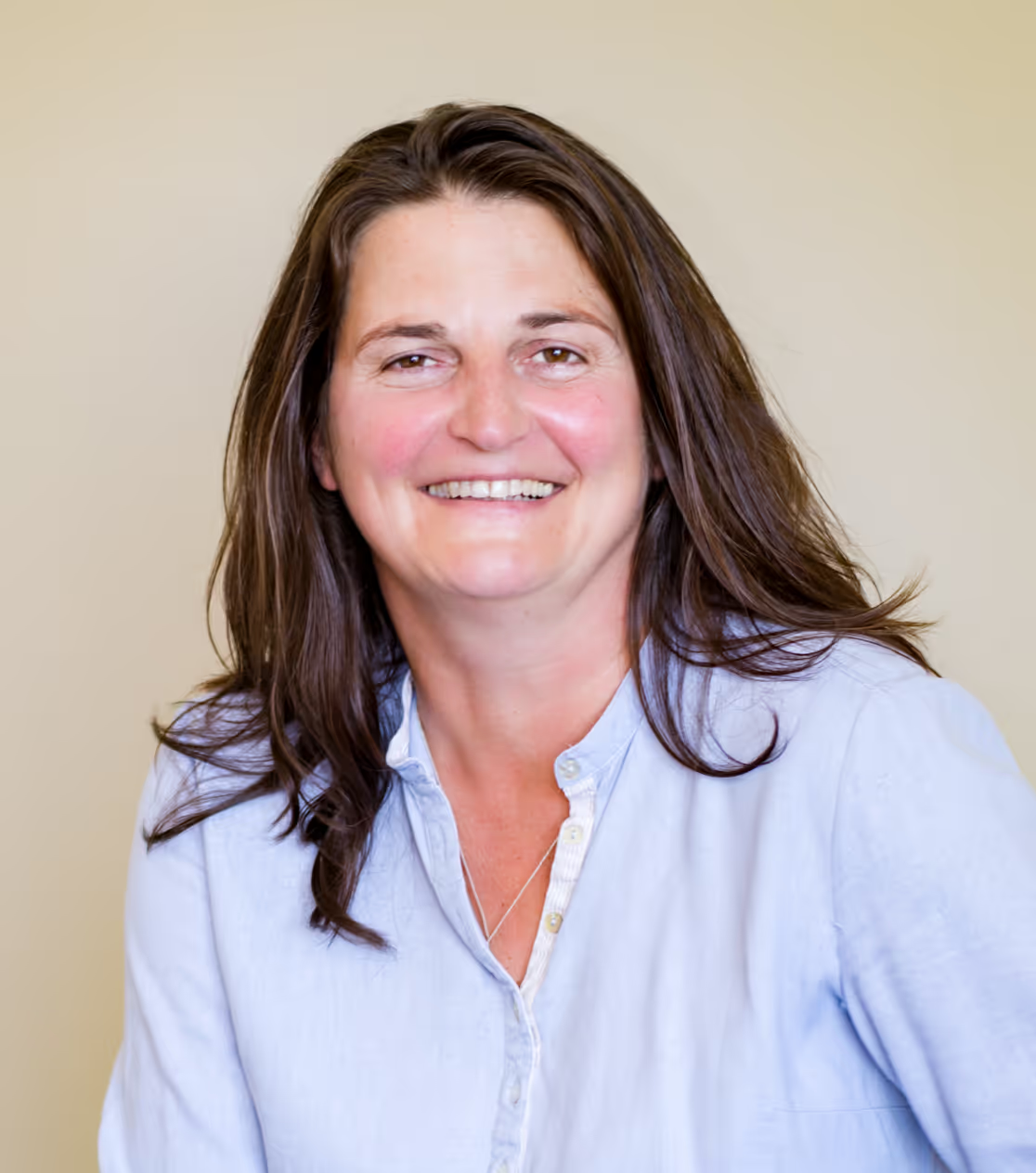
Anne brings over two decades of experience in regulatory affairs. Originally trained as a software developer, she worked across Europe in quality and process management before specialising in the certification of medical devices. Since 2021, she has supported New Zealand and Australian companies in preparing their products for global approval. Her work often focuses on early-stage teams, including suppliers and developers who need to align innovation with regulatory expectations.

Abbas Al-Murrani is a Health Economist with diverse experience in health and health economics, having worked for the University of Auckland as well as Waitematā, Auckland and Canterbury District Health Boards. Health Economics Consulting NZ helps organisations & health systems navigate openness and transparency in investment decisions by capturing, translating and understanding economic value.
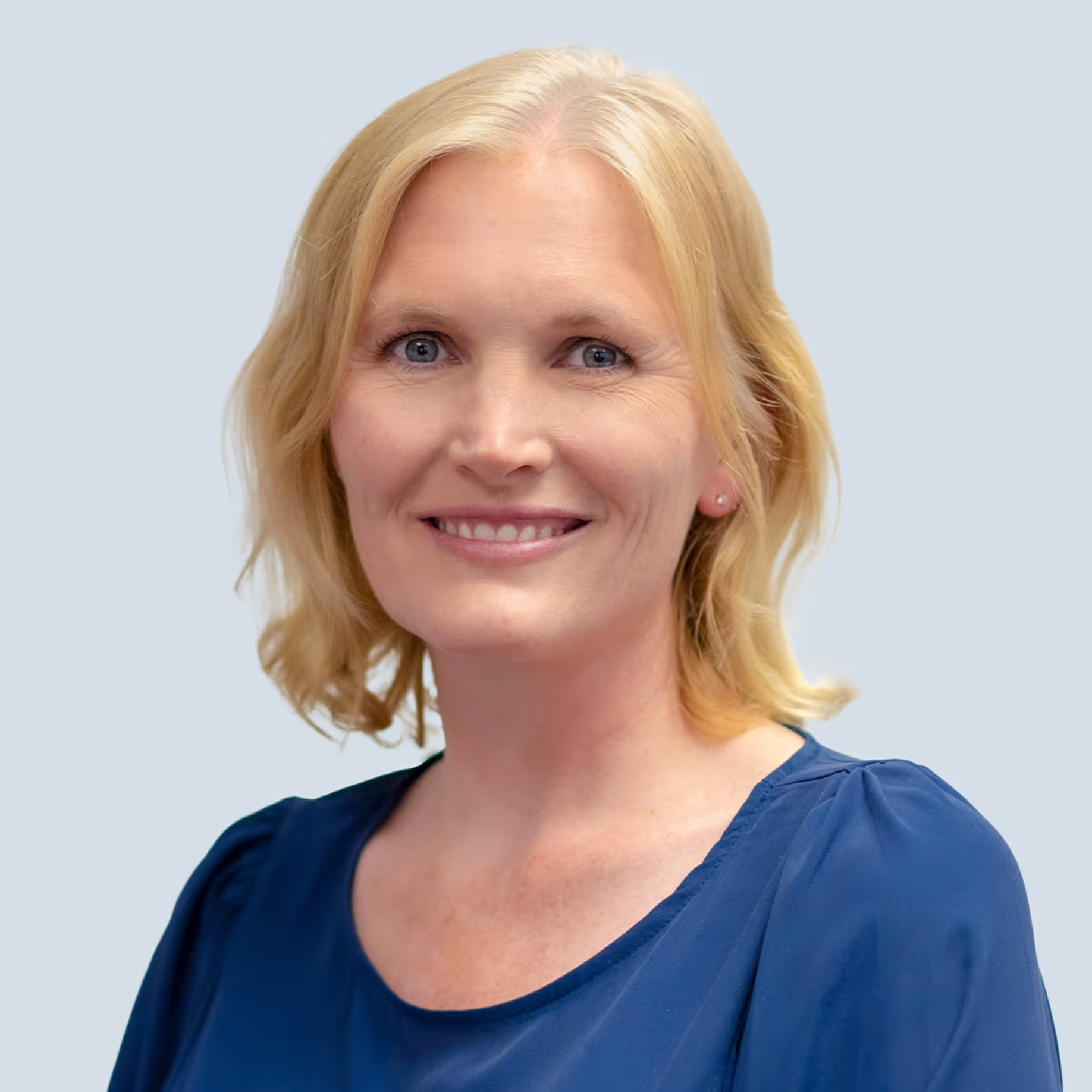
Julie has over 20 years of experience in clinical research, conducting studies in New Zealand and internationally. With in-depth knowledge of New Zealand's clinical research regulations and quality standards, Julie's extensive experience covers various therapeutic areas, investigational products, devices, and all trial phases.

Cannulight Technology Ltd is a New Zealand medical device company focused on improving peripheral IV cannulation. Cannulight is a simple, sterile, single-use attachment for standard IV catheters that provides instant visual confirmation when the vein is entered, helping reduce failed attempts and improve both clinician confidence and patient experience.
Swallowing Technologies Ltd (SwalTech) is a New Zealand MedTech company developing digital tools to improve the assessment and rehabilitation of swallowing disorders. Their BiSSkApp platform uses biofeedback and mobile technology to support evidence-based swallowing therapy in clinical and home settings, helping patients and clinicians achieve better outcomes.
ClinList is an early-stage workflow platform helping doctors move away from outdated systems and fragmented communication. Built to integrate existing medical records into a mobile-first interface, ClinList brings critical patient information directly to doctors at the point of care, helping reduce administrative burden, improve team coordination, and create safer workflows for patients.
Practical guidance to help healthtech companies
move from early traction to scalable growth.
Build to Scale is the HealthTech Activator’s capability-building series designed for founders and teams who are preparing for their next stage of growth. The series focuses on real-world challenges of scaling a health tech company, with expert-led insights, founder stories, and practical tools you can apply immediately.
Build to Scale brings together guidance across four core pillars:
Clinical validation
Generate the right evidence to support your claims
Market validation
Understand your customers and validate real unmet needs early
Regulatory
Navigate regulatory pathways and be market-ready
Reimbursement
Plan early for reimbursement and adoption at scale
All content is tailored to the New Zealand healthtech context, with relevance across global markets.